Fruiting chamber temperature: target ranges by species
Target fruiting temperatures for cubensis, oysters and lion's mane, what goes wrong above and below them, and cheap ways to keep your chamber in range.

Derick11 min read
Key takeaways
- Most fruiting chambers fruit well between 65 and 80°F, with exact targets depending on the species you are growing.
- Cubensis fruits cleanly at 70–75°F, oysters prefer 60–70°F, and lion's mane produces the best pin quality at 60–68°F.
- Fresh air exchange, light, and a humidity spike trigger pinning more reliably than dropping the temperature.
- Temperatures above 80°F increase contamination risk and cause primordia to abort faster than they can mature.
- Manage temperature ceilings and log flush data per tub rather than chasing a single static temperature setpoint.
Most fruiting chambers fruit well between 65 and 80°F, with the exact fruiting chamber temperature depending on species: cubensis and oysters tolerate the upper end, lion's mane prefers the lower. Temperature matters less than humidity and FAE at pinning, but cross your limits and pins abort or contamination takes over. This guide gives species- and tek-specific ranges plus corrective actions.
What temperature should a fruiting chamber be for common species like oyster, lion's mane, and cubensis?
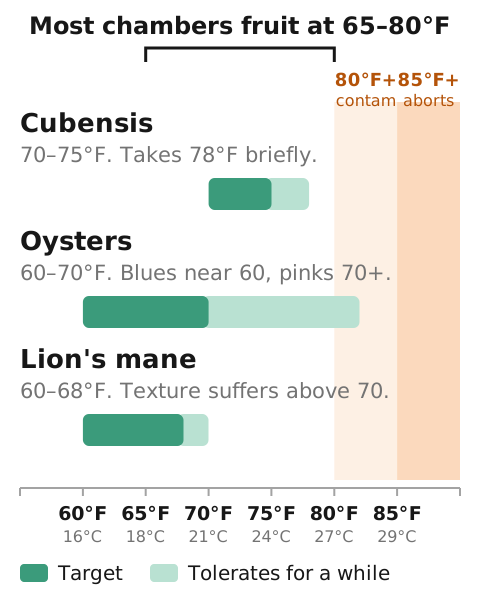
Cubensis: 70–75°F is the working band
Pinning starts around 70°F and flushes mature cleanly up to 75°F. Below 68°F pins stall; above 78°F you get leggy stems and a rising contamination rate.
Oysters: 60–70°F for most varieties
Blue and pink oysters bracket this range at opposite ends, so know your strain: blues fruit down near 60°F, pinks want 70°F or warmer. Wikipedia's Pleurotus ostreatus entry covers the species basics if you want the cultivation background.
Lion's mane: cooler is better for pin quality
Aim for 60–68°F. Warmer chambers produce looser, more fragmented primordia instead of the dense teeth you want.
The reason the working band matters more than the exact number is that your chamber rarely sits at one temperature anyway. A martha tent next to a heat register swings 5°F in a day, and your monotubs swing more. What you are actually managing is the ceiling: cubensis tolerates 78°F briefly, oysters tolerate low 80s, and lion's mane starts degrading in texture and pin quality above 70°F.
Floors matter less, but a tub parked on a cold concrete slab can sit 5°F below room temperature and stall pinning without any obvious cause. That is why placement and insulation beat heaters as first moves. If you log temperature alongside each flush in your notes, or in a tool like Hypha, you learn your own strains' limits faster than any species chart can tell you. After three or four cycles, your own logs replace the generic chart entirely.
Does fruiting chamber temperature need to be different from colonization temperature?
The 5–10°F drop myth and what actually triggers pins
The classic advice says drop your fruiting chamber temperature 5–10°F below colonization temps to shock mycelium into pinning. In practice, the drop helps some species and does nothing for others. Cubensis pins fine at a steady 75°F; oysters and lion's mane often pin better a few degrees cooler. What actually triggers pinning is the combination of fresh air exchange, light, and a humidity spike, not the temperature change itself. If you are already running 70–75°F for colonization, you are inside the fruiting range for most species you grow.
When to keep temps identical
Keep temps identical when you run many strains in one martha tent or shelf and a drop would push your warmest species below its fruiting floor. One chamber, one setpoint is easier to hold and log flush-to-flush. Track the setpoint you actually ran per tub so you can compare biological efficiency across flushes instead of guessing which temperature produced the better crop.
What is the PF Tek fruiting chamber temperature range for cakes in a shotgun chamber?
PF Tek cakes fruit best between roughly 70–75°F, which is ordinary room temperature, so the tek has never called for a heated chamber. The cake itself is your thermostat: a fully colonized cake resists temperature swings better than grain spawn, so you have more margin than with a monotub.
Shotgun tub temps in a room-temperature house
A shotgun chamber with drilled holes and perlite tracks ambient room temperature within a degree or two. If your house sits at 68–74°F, the tub needs nothing. The holes do double duty: they vent CO2 and dump heat, so a shotgun tub runs slightly cooler than a sealed monotub in the same room.
Lower limit: below 65°F pins stall
Below about 65°F, pinning slows dramatically and flushes stretch from days to weeks. The mycelium survives, but biological efficiency drops because aborts pile up.
Upper limit: above 80°F bacterial blotch risk
Above 80°F, bacterial blotch and wet spot multiply faster than the mycelium can defend the cake. If you log temps per tub with a sensor, you will see shotgun tubs swing 4–6°F between lights on and off, which is usually harmless but worth knowing before blaming a weak flush on genetics.
How hot is too hot in a mushroom fruiting tent, and what happens above the limit?
For most species you run, fruiting fails somewhere in the low-to-mid 80s°F. Cubensis tolerates the most heat; oyster and lion's mane start producing weak, sparse flushes well below that ceiling. The practical rule: if your tent sits above 80°F for days, expect problems even if pins still appear.
What 85°F+ does to pins and primordia
Above roughly 85°F, primordia abort faster than they mature. Pins yellow, stall at pea size, and drop off before the first flush finishes. Flushes that do survive come out thin-stemmed, small-capped, and often mushy, which wrecks your cost per pound and your biological efficiency numbers for that batch.
Why heat plus stagnant air is the contamination combo
Warm, humid, still air is exactly what bacillus wet spot and bacterial blotch want. When you heat a tent, evaporation rises and stagnant pockets form, so contamination rate climbs alongside pin abort. If you log flush outcomes per strain and chamber, patterns like this are easy to spot over a few cycles, which is the core of what a flush log is for.
How does temperature interact with humidity and fresh air exchange in a tent-style fruiting chamber?
Warm air holds moisture: the dew point problem
Raise the tent temperature without adding water and your relative humidity drops, because warmer air holds more vapor before it saturates. A martha tent at 75°F can sit at 90% RH while the same wetted walls at 68°F read 98%. That is why heating a tent usually dries pins before it speeds them up: mist more, not hotter.
Why fanning beats chasing a number
FAE does two jobs temperature cannot: it dumps metabolic CO2 and it evaporates moisture off pin surfaces, which is the actual fruiting trigger. Two degrees off your target with steady FAE and pinned surfaces drying between mists outperforms a perfect 70°F tub with stale air. Track the tradeoff per strain in your logs rather than chasing one number; if you are running 5–20 strains in parallel, recording chamber temp alongside flush weight makes the pattern obvious flush-to-flush.
Reading condensation on tent walls
Heavy droplets running down the walls mean RH is near saturation and FAE is too low; a light fog that clears within a minute of fanning is what you want. Standing water and still air are also the recipe for bacterial blotch. Penn State Extension finds blotch spots form where caps stay wet for 4 to 6 hours or more after watering, and that condensation and swings of just a few degrees keep caps wet. The bacterium behind it was long known as Pseudomonas tolaasii.
The consolidated temperature decision table by species and chamber type
How to read the table
The target range is the pinning window, not the colonization range. Too-cold and too-hot actions assume you are already running RH 90%+ and proper FAE; temperature fixes alone will not save a dry tub. Ranges are conservative midpoints for cubensis, oyster, and lion's mane, the three setups most readers run.
| Species | Chamber type | Target range | Too cold | Too hot |
|---|---|---|---|---|
| Cubensis | Shotgun tub / PF Tek cakes | 71–75°F | Pins stall; move tub to a warmer room, no heat mat under cakes | Abort risk and trich spike; crack lid, increase FAE |
| Cubensis | Martha tent | 71–76°F | Raise tent off cold floor; recirculate tent air | Add a small fan cycle, vent top of tent |
| Oyster (blue/gold) | Monotub | 65–72°F | Cold slows pins badly; insulate tub bottom | Wide temp swings abort pins; stabilize before adding FAE |
| Lion's mane | Fruiting chamber | 65–70°F | Slow, malformed pins; accept slower flushes rather than heating | Hairy fruits go soft and brown; cool the room, not just the chamber |
Corrective actions that cost nothing
Elevation beats heat: move tubs off concrete floors and up a shelf before buying anything. For heat, a sealed water bottle warmed to body temperature inside a shotgun tub holds cakes in range overnight. For heat spikes, swap the misting for colder water and run your FAE cycle longer, since moving air strips heat faster than it dries substrate at RH 90%+.
How do you heat or cool a fruiting chamber without spending on HVAC?
Passive heat: room placement, seed mats with a thermostat
Move the tent to the warmest stable room you have; a basement at 60°F needs active help, a spare bedroom at 72°F often doesn't. A seedling heat mat under a monotub with a cheap thermostat probe holds substrate temps within a degree or two for under $40. Put the probe between the tub wall and the substrate, not on the mat.
Cooling: ice bottles, night flushes, tent placement
Frozen water bottles swap heat for free; two rotating bottles hold a martha tent 5–8°F below ambient for hours. Run your humidifier and FAE cycles at night when room temps drop. Avoid rooms with south-facing windows or heat-producing electronics.
Why a probe in the substrate beats an ambient reading
Substrate lags ambient by several degrees, and pins respond to substrate temperature. Because relative humidity readings shift with temperature even when water content doesn't (standard dew point physics; see the National Weather Service's explanation), an ambient-only sensor can hide a dry, warm substrate block. A $20 probe beats guessing.
What temperature swings are acceptable before pins abort or contamination takes over?
Why 10°F overnight swings rarely hurt
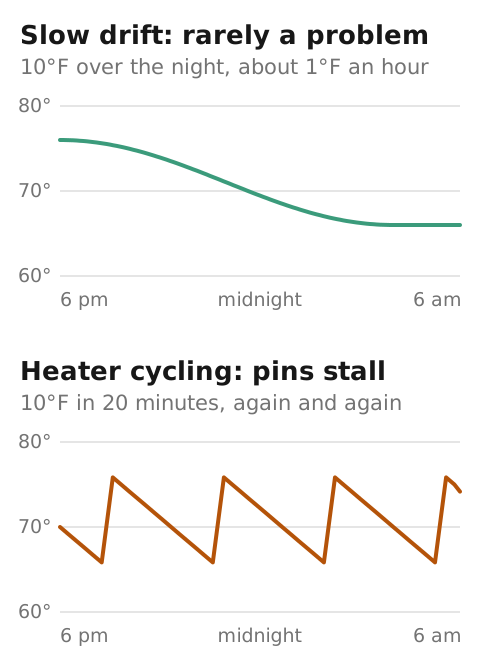
Mycelium and pins tolerate slow diurnal drift well. A monotub or martha tent that slides 8–10°F overnight and recovers over several hours rarely triggers pin abort, because the organism adapts as conditions change gradually. A steady drop can even help trigger pinning in some species.
Fast swings from heaters and lights: the real problem
Damage comes from rate of change, not magnitude. A space heater kicking on can jump a tent 10°F in 20 minutes, and that shock is what causes pins to stall or abort. Lights on a timer over a sealed tub can do the same. Aim for swings under 2°F per hour.
Log it per flush: note max, min, and fastest hourly change alongside your flush weights and contamination events. After a few cycles you'll see which chambers actually need intervention and which swings your spreadsheet shows are harmless. If you would rather not maintain a spreadsheet, a grow tracker like Hypha keeps each zone's temperature history from its sensors next to every block's logged flushes, so the numbers you need to compare cycles are already in one place.
FAQ
What temperature should my fruiting chamber be?
Most chambers fruit well between 65 and 80°F, but the working band depends on species. Cubensis flushes cleanly at 70–75°F, most oysters want 60–70°F, and lion's mane prefers 60–68°F. Since chambers swing several degrees daily, manage the ceiling rather than chasing one exact number.
Is fruiting temperature the same as colonization temperature?
Not necessarily. The classic 5–10°F drop helps some species and does nothing for others; cubensis pins fine at a steady 75°F. What actually triggers pinning is fresh air exchange, light, and a humidity spike. If you colonized at 70–75°F, you are already inside the fruiting range for most species.
Can it be too hot in a mushroom fruiting tent?
Yes. Above roughly 85°F, primordia abort faster than they mature, and surviving flushes come out thin-stemmed and small-capped. Above 80°F for days, expect problems even if pins still appear. Heat plus stagnant air also raises contamination risk, so increase FAE and mist with cooler water rather than adding heat.
Do I need a heater in my fruiting chamber?
Often no. A spare bedroom at 72°F usually suffices, and elevation off cold floors fixes many too-cold tubs for free. If you do need heat, a seedling mat with a thermostat probe holds substrate temps for under $40. Place the probe between the tub wall and the substrate, not on the mat.
What is the best PF Tek fruiting chamber temperature?
PF Tek cakes fruit best at roughly 70–75°F, which is ordinary room temperature. A shotgun chamber tracks ambient within a degree or two, so a house at 68–74°F needs nothing extra. Below 65°F pins stall; above 80°F bacterial blotch multiplies faster than the mycelium can defend the cake.